Dialysis diet tracker for phosphorus, potassium, sodium and fluid
A dialysis diet is four or five numbers at once, and almost none of the food in front of you carries a label. renalee turns a photo, a typed description or a restaurant menu into an estimate of what a meal adds to each of your daily targets — so you can decide with something better than a guess.
Why this diet is hard to keep track of
Labels do not add up
Packaged food lists sodium, sometimes potassium, and rarely phosphorus — the additives that matter most are often hidden behind an ingredient name. Home cooking lists nothing at all. And the question is never about one nutrient: a portion that fits your protein target for the day can put phosphorus somewhere you did not intend.
Fluid arrives all day
Fluid is its own problem. It arrives in coffee, soup, fruit and medication, spread across a whole day, which is exactly the pattern people underestimate. By the time the scale says something at the next session, the day it came from is long gone.
Not on dialysis? The CKD diet tracker page walks through what shifts at each earlier stage.
What renalee does about it
Check a meal in seconds
Photograph the plate, type what you ate, or scan a restaurant menu. renalee estimates the dishes it recognises, and you adjust the portion until it matches what is actually in front of you — every number updates as you do.
Targets that assume dialysis
Say you are on dialysis and renalee starts from the dialysis set rather than the pre-dialysis one — more protein, tighter potassium and fluid — drawn from published clinical guidelines. Every target is editable, because the number your dietitian gives you is the one that counts.
Fluid across the whole day
Water, coffee and other drinks go in with a couple of taps, and the fluid inside meals is counted with them. The running total is visible while there is still room to act on it.
Weight between sessions
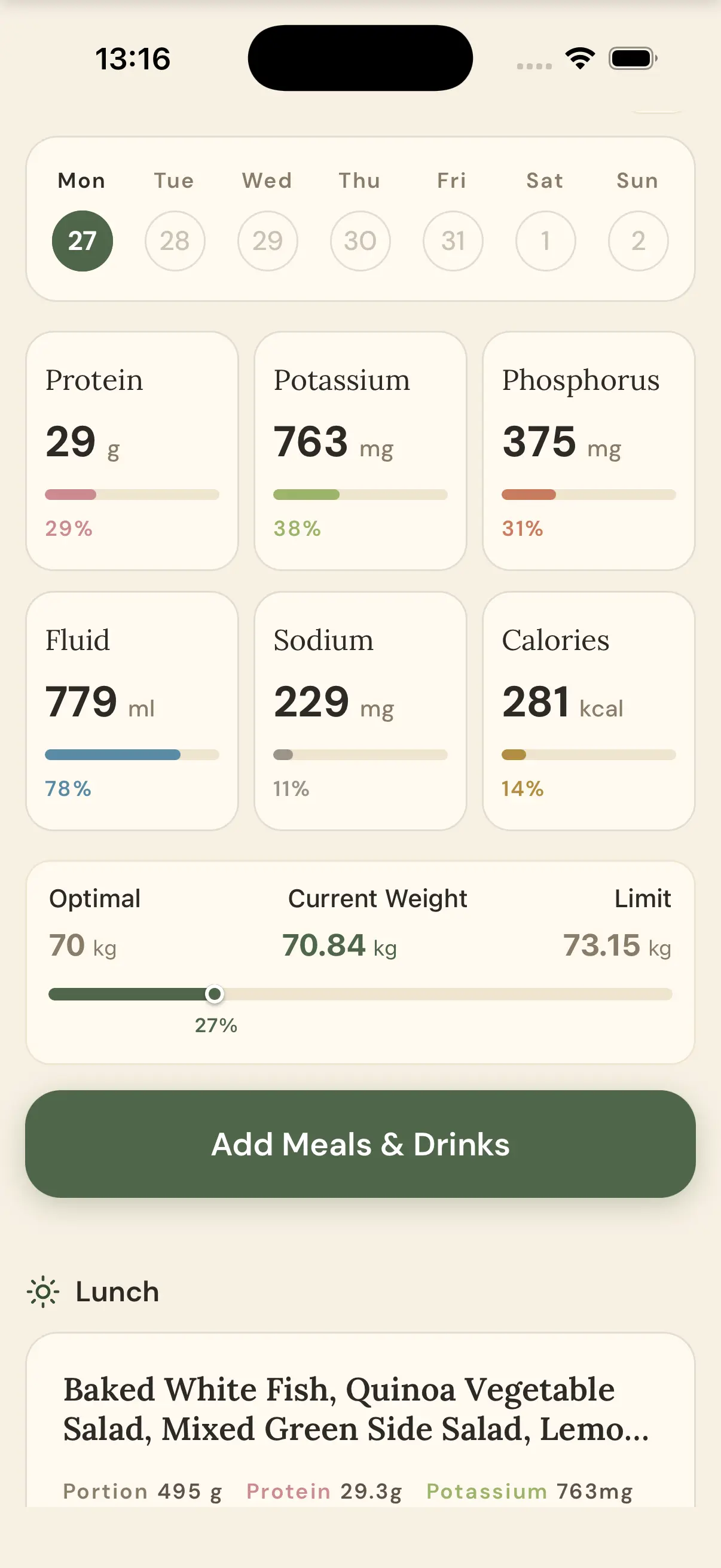
Record your dialysis days and times and set a dry weight. renalee follows the gain that builds between sessions against a ceiling of your choosing, and shows how much of it the day has already used.
The six numbers it follows
Each one has its own daily target and its own colour, so a full day reads at a glance rather than as a spreadsheet.
- Phosphorusmg
- Potassiummg
- Sodiummg
- Proteing
- FluidmL
- Calorieskcal
Interdialytic weight gain, tracked at home
Between sessions the fluid you take in has nowhere to go, and for most people the first honest account of the week arrives on the scale at the clinic — by which point the days it came from are over.
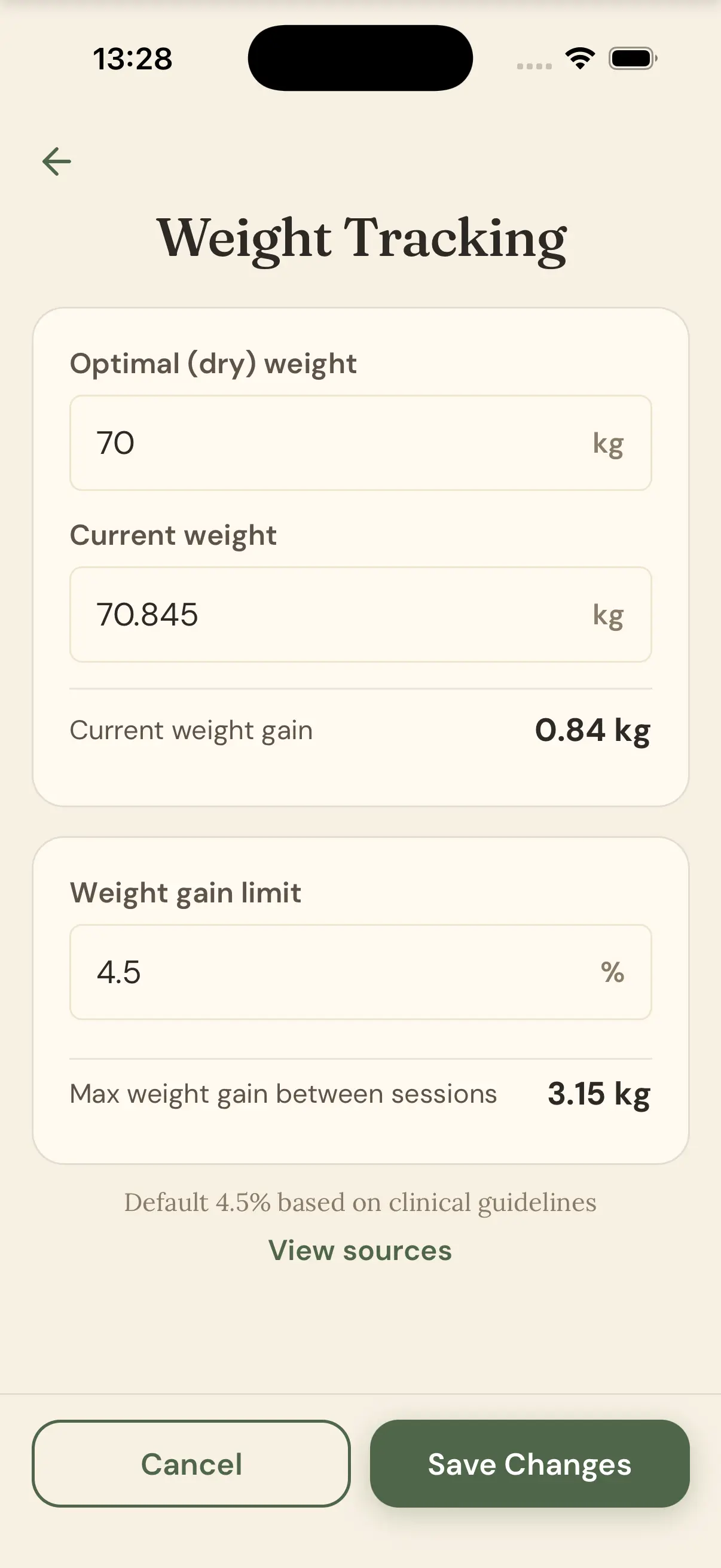
Tell renalee which days you dialyse and when the session ends. At that point the count restarts and renalee asks what you weigh, because what you leave a session at is rarely exactly your dry weight, and a gain is only as good as the number it starts from.
Dry weight stays the reference the gain is measured against, and you set the ceiling as a percentage of it. renalee opens at 4.5% so there is something to track against from the first day, but that is a starting point rather than a recommendation — the number to use is the one your dialysis team gives you. The daily tracker then shows how much of it the day has used.
Something to bring to your appointment
A week or a month of entries can be turned into a summary covering up to 90 days, to open with your renal dietitian or nephrologist at your next appointment.
Every meal
What you ate, meal by meal, in the order the day happened.
Six numbers, averaged and by day
Phosphorus, potassium, sodium, fluid, protein and calories — a daily average for the period, and the day-by-day totals behind it.
Days against targets
Where the days sat against the targets you are working to.
Your diary stays on your phone
The diary itself never leaves your device. Only the meal you ask about is sent for analysis, and it is not kept afterwards.
Stays on your device
Meals, fluid, weight between dialysis sessions and your daily targets are stored on your phone rather than on our servers.
Anonymous to the AI
A photo or a menu goes out carrying no name and no account, and is not kept once the estimate comes back.
Deleted when you say
Deleting your account removes the diary with it, on the spot — no copy left behind.
The details are in the privacy policy.
Questions people ask first
Is renalee the same app as Dialysis Diet Tracker?
Yes. Dialysis Diet Tracker was renamed renalee in 2026 — a shorter name that is easier to say and to find. Same app, same team, and your diary carries over unchanged.
Can I set my own daily targets?
Yes. renalee suggests starting values based on the CKD stage you enter, and every target can be edited. The suggestions come from published clinical guidelines and are starting points to review with your renal dietitian, not a prescription.
Does it track fluid as well as food?
Fluid is one of the six numbers renalee follows. Drinks can be added in a couple of taps, and fluid contained in meals is included in the estimate for that meal.
How accurate are the nutrient estimates?
They are estimates, not measurements. Real dishes vary with preparation, brand and portion, so the numbers should be read as a guide to the size of a meal's contribution rather than an exact value. Every estimate can be edited before you save it.
Is it free?
Logging meals, setting your daily targets and tracking weight between sessions are free, and free accounts include five AI meal analyses a day. Restaurant menu scanning and diet summaries are part of the paid subscription, which also removes the daily cap on analyses.
Where renalee stops and your care team starts
A diary, not a device
renalee is an educational food diary. It does not diagnose or treat anything, and it is not a medical device.
Estimates, not verdicts
Where it flags a dish as better or worse for a kidney diet, that is a general educational estimate, not medical advice.
Your team sets the numbers
Suggested targets are starting points to review together, not a prescription. The guidelines behind them are on the medical sources page.
From the blog: The phosphorus hiding in my groceries — and why the label never told me
Start with today's lunch
Free to download, and free to keep using — five AI meal analyses a day without a subscription.