Food photo analysis for a kidney diet
Most food never comes with a label. renalee reads a photograph of the plate, separates it into the dishes it recognises, and estimates what each one contributes to the six numbers a kidney diet turns on — before you decide whether to keep it.
Between the photograph and the diary
You photograph the meal
Camera or gallery, one shot of the plate as it is. No weighing, no lookup, no searching a database for the closest match.
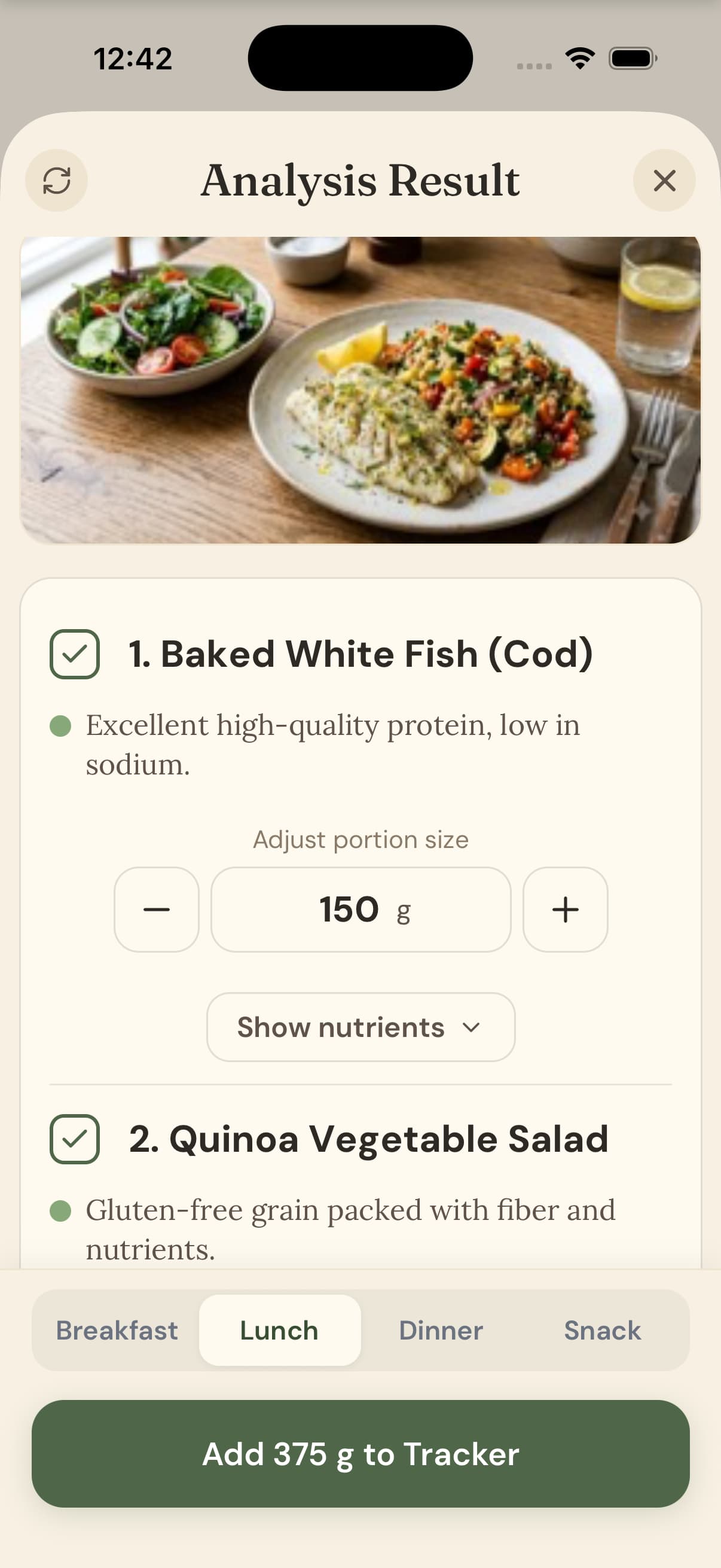
It comes back as separate dishes
Not one lump sum: the fish, the rice and the salad are listed individually, each with its own estimate. A plate is rarely one food, and a single total hides which part carried the load.
You correct what needs correcting
Portions are adjustable item by item, in grams, and anything you did not actually eat can be switched off. Every change recalculates all six numbers immediately, so you can see what a smaller serving would have meant.
You add it to the day
Pick breakfast, lunch, dinner or a snack, and the meal joins the running totals. If it carries the day past one of your targets, the app says so at that moment rather than at the end of the day.
Three ways to describe a meal
A photograph is the fastest, but it is not always the best evidence. What you know about the recipe is often worth more than what the camera can see.
Shoot the plate. Best for restaurant food and anything you did not cook yourself.
Type what went in — "two eggs, toast, a spoon of butter". Best for home cooking, where you know the recipe and the camera does not.
Photograph a restaurant menu and get the dishes read before you order, rather than after the plate arrives.
Why it is an estimate, and why that is enough
Nothing photographed is exact
Two plates of the same dish are not the same meal. Salt varies by cook, phosphorus additives vary by brand, and a portion photographed at an angle is a judgement call. Nothing photographed can be reported to the milligram, and renalee does not pretend otherwise.
The size of the contribution is enough
What it can do is tell you whether this meal used a small part of today's potassium or most of it — in seconds, every day, without a spreadsheet. That is the difference between tracking a kidney diet and giving up on it.
When you know better than the estimate, overwrite it. The number that lands in your diary is the one you approved.
The photo goes out; the diary does not
Analysis runs on a server, so the picture has to travel. Nothing that identifies you travels with it, and nothing is kept.
Sent without a name
The photo or description reaches the analysis service with no name and no account attached, and is not stored once the answer comes back.
The diary stays here
What you keep — meals, targets, weight, CKD stage — is written to your own device rather than to our servers.
Readable with no signal
Analysing a new meal needs a connection. Everything already saved opens without one, which is most of what you do.
The full account is in the privacy policy.
Questions people ask first
How accurate is analysing food from a photograph?
It is an estimate, not a measurement. A photo shows what is on the plate but not the recipe: how much salt went in, whether the stock was a cube, which brand of bread it is. renalee is good at recognising dishes and judging portions, and the numbers are close enough to tell a heavy meal from a light one — but they should be read as a guide, and corrected whenever you know better.
Does it work with home-cooked food?
Yes, and that is mostly what it is for. Packaged food already carries a label; a plate of stew does not. If a dish is unusual or the photo is unclear, typing what went into it gives the analysis more to work with than the picture alone.
What if the analysis gets something wrong?
Change it. Portions are adjustable per item, items you did not eat can be deselected, and nothing reaches your diary until you add it. The saved entry is whatever you decided, not whatever the model first suggested.
Does it need an internet connection?
For analysis, yes — that part runs on a server, and the app tells you when there is no connection. Your existing diary, targets and history stay readable offline because they live on the device.
What happens to my photos?
They are sent for analysis without your name or account attached, and are not kept afterwards. The diary they end up in stays on your phone. The details are in the privacy policy.
Is it free?
Free accounts get five AI meal analyses a day, from photos or typed descriptions, and the diary itself costs nothing. Restaurant menu scanning and diet summaries are part of the paid subscription, which also removes the daily cap.
Where renalee stops and your care team starts
A diary, not a device
renalee is an educational food diary. It does not diagnose or treat anything, and it is not a medical device.
Estimates, not verdicts
Where it flags a dish as better or worse for a kidney diet, that is a general educational estimate, not medical advice.
Your team sets the numbers
Suggested targets are starting points to review together, not a prescription. The guidelines behind them are on the medical sources page.
The diet itself is covered stage by stage on the CKD diet tracker and dialysis diet tracker pages.
From the blog: The phosphorus hiding in my groceries — and why the label never told me
Try it on the next thing you eat
Five analyses a day without a subscription, and the diary is free to keep.